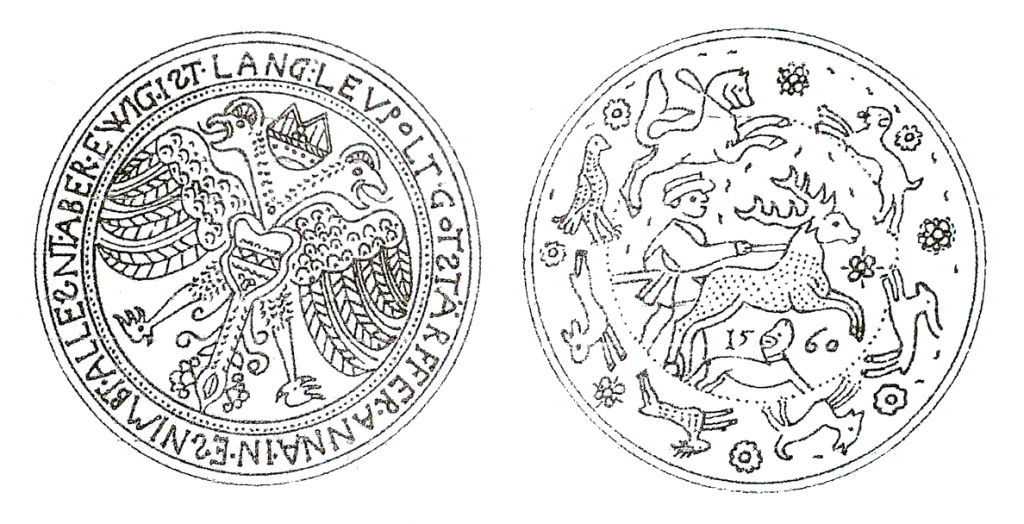
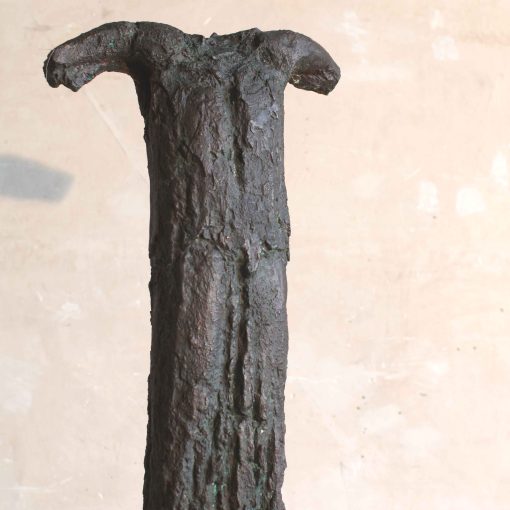
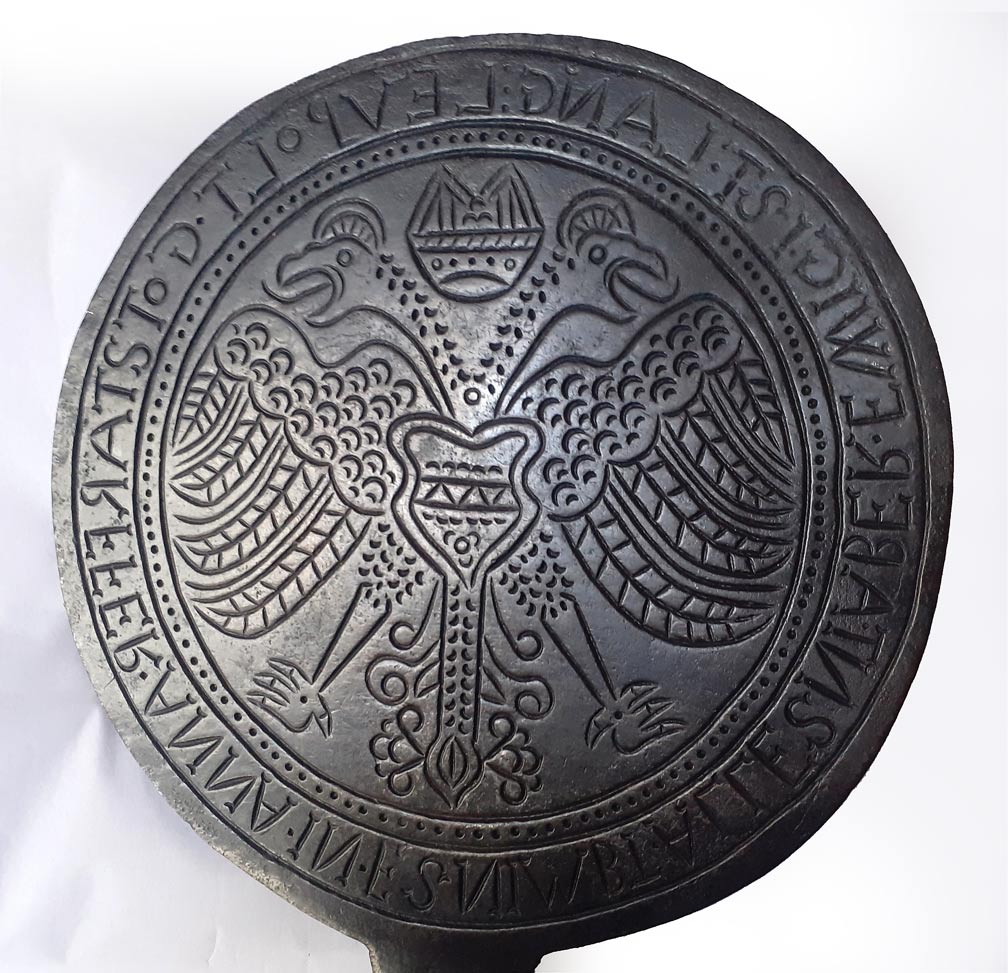
A wafer iron from Neustadt/Cristian in the Burzen/Bârsa county features plate decorations that hark back to the Renaissance. This long-handled, 80-cm-long tongs-like device moves two plates, each 18 cm in diameter, which bear symbolic images. One plate depicts a double-headed eagle with a breastplate, above which the imperial crown hovers. The imperial city of Vienna symbolizes submission to earthly authority. The inscription reads:
LEUPOLT. GOTSTÄRFFER. ANNA.IN. ES.NIMBT. ALLES.NT (ein End). ABER.EWIG. IST.LANG:
Everything comes to an end, but God’s patience is eternal.
The inscription refers to verses from Proverbs, Ecclesiastes, and the Psalms.
The other panel depicts hares and a roebuck running in a circle, chased by dogs, and a stag in the center. The stag has been cornered by the dog, and the hunter has dismounted from his horse to deliver the killing blow. The raven is already waiting for what remains of the dead stag. Beneath the stag is the year 1560.
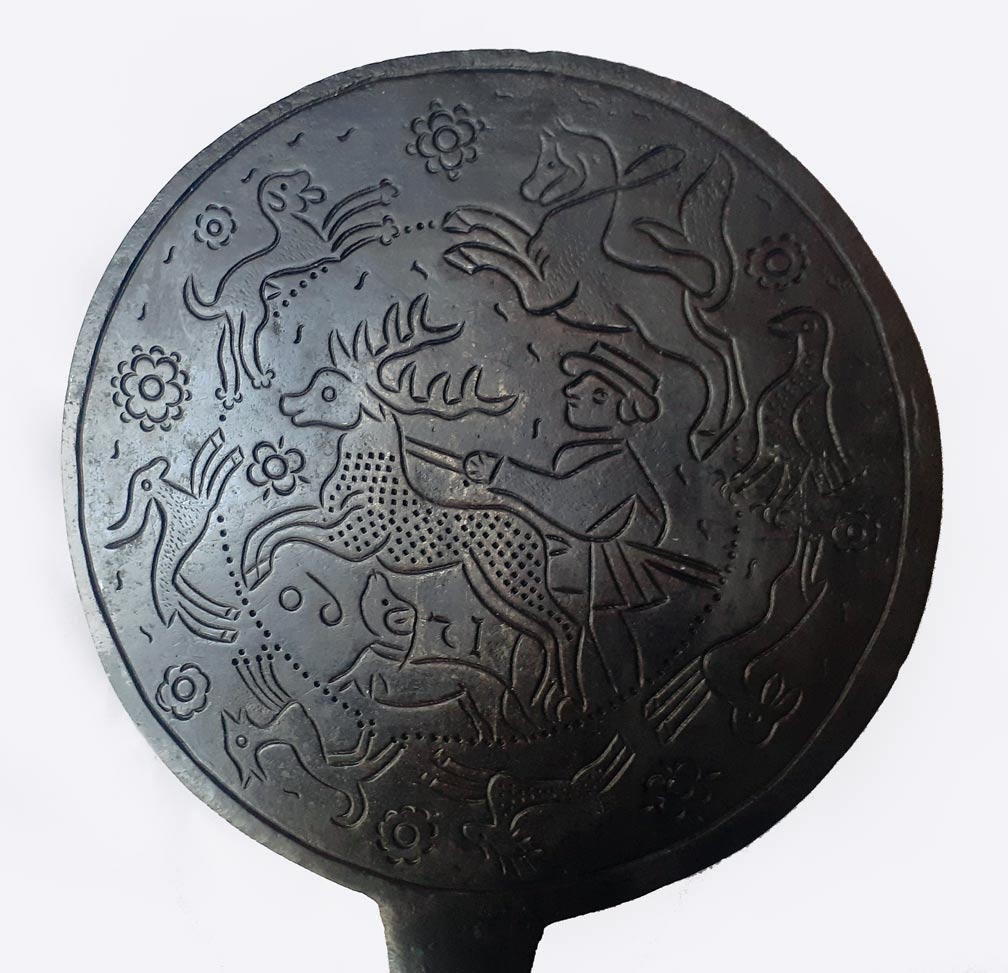
The design of this memento mori motif, typical of the period, is reminiscent of the wheel of fortune, which Humanism revived. While baking, this motif was transferred to the “Himmelbrot” (heavenly bread), which in some communities was distributed during the Christmas and New Year season and on Maundy Thursday to children—but also to the elderly and sick who could not attend church services. The communion wafers were cut out from the same “heavenly bread.” Baking was the responsibility of the household of the younger church father, the preacher, or the preacher- teacher.
The Neustadt wafer iron has been passed on privately through the female line since 1792.
On April 30, 2026, retired Pastor Kurt Boltres loaned it to the Church Museum.
Bibliography: Gustav Treiber, Ein über 400 Jahre altes Oblateneisen aus Neustadt im Burzenland (A 400-Year-Old Wafer Iron from Neustadt in the Burzen County), in: Korrespondenzblatt 3/1972, Gundelsheim.